Flooring systems engineered for demanding facilities.
Epoxy, urethane, decorative resinous flooring, polished concrete and specialized concrete surface solutions installed by New England Floor & Wall, based in Westfield, Massachusetts.
Commercial and industrial flooring solutions across New England
Floor performance begins with understanding the facility. Foot traffic, equipment loads, moisture exposure, cleaning requirements, existing substrates and the appearance you want all influence the appropriate flooring system. NE Floor & Wall works with project teams to evaluate these factors and plan the preparation and installation work.
Explore our flooring systems
 01 / RESINOUS
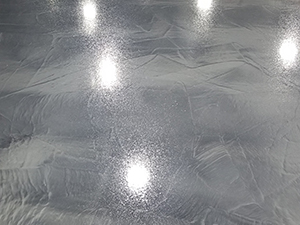
Epoxy & Resinous Flooring
Seamless epoxy coating and mortar systems for commercial and industrial floors, including areas that need a cleanable, durable surface.
 02 / URETHANE
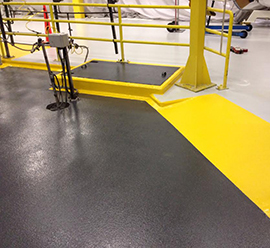
Urethane Flooring Systems
Self-leveling urethane and other specified resinous systems for facilities with particular surface, maintenance and performance requirements.
 03 / DECORATIVE
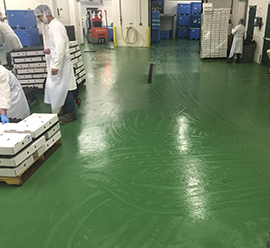
Decorative Flake & Quartz Floors
Decorative broadcast finishes that combine color and texture with a protective resinous floor system. Project options include flake and quartz aggregate.
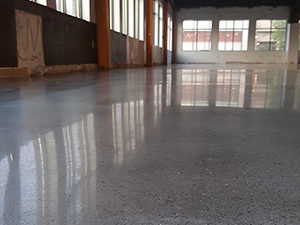 04 / CONCRETE
Polished Concrete
Concrete polishing for facilities seeking a finished concrete appearance, with preparation and finishing tailored to the existing slab.
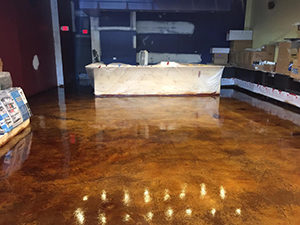 05 / PREPARATION
Floor Leveling & Concrete Overlays
Surface preparation, leveling and resurfacing approaches that help address existing-floor conditions before the specified finish is installed.
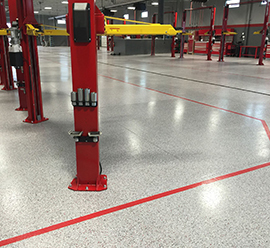 06 / SPECIALTY
Specialty Coatings & Waterproofing
Specialty coating, waterproofing and related floor protection options considered according to the substrate, exposure and project scope.
What determines the right flooring system?
There is no single finish for every industrial or commercial floor. A project evaluation should account for the demands placed on the surface and the condition of the existing substrate.
See the systems in real facilities
Explore examples of decorative quartz epoxy at Harriman & West Airport, epoxy and decorative flake flooring at Hilliard’s Chocolates, and self-leveling urethane bathroom floors at rehabilitation facilities in western Massachusetts.
EXPLORE SUCCESS STORIES ↗Flooring systems FAQ
How long does commercial or industrial epoxy flooring last?
Service life depends on the flooring system, surface preparation, traffic, impact, chemical exposure and maintenance. A coating in a lightly used commercial area may perform differently from one exposed to forklifts or frequent washdowns. The best starting point is to evaluate how the facility uses its floors.
What is the difference between epoxy and urethane flooring?
Epoxy systems can provide a seamless, durable surface with a range of finishes. Urethane systems are often considered where thermal changes, frequent cleaning or particular chemical exposures are important. Performance varies by formulation and system thickness, so the right choice depends on the conditions in your facility.
Can epoxy flooring be installed over existing tile or concrete?
It may be possible, but the existing surface must be evaluated first. Concrete condition, moisture, contamination, adhesion and the type of tile or previous coating all affect preparation and system selection. Some floors require removal, repair or additional preparation before installation.
How long does industrial epoxy flooring take to install and cure?
The schedule depends on the floor area, required repairs, number of coats, product chemistry, temperature and humidity. Installation time and the time before foot traffic, equipment or full service are not necessarily the same. A project-specific schedule helps plan around facility operations.
Is epoxy flooring or polished concrete better for a warehouse?
Both can be suitable. Polished concrete uses the existing slab as the finished surface and may work well where a low-maintenance concrete finish is desired. Epoxy adds a resinous surface that can offer options for color, markings, cleanability and protection. Traffic, slab condition, exposure and maintenance requirements should guide the decision.